Partners Can Beat Psycholgist Read in His Mind
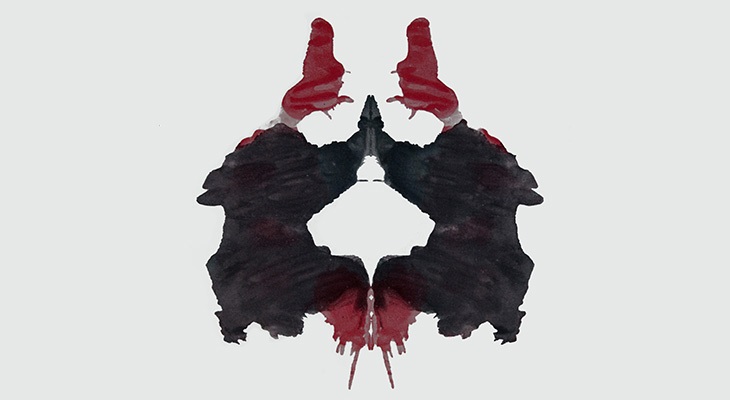
Many famous experiments studying human behavior take impacted our fundamental understanding of psychology. Though some could not exist repeated today due to breaches in ethical boundaries, that does not diminish the significance of their findings. Some of these important findings include a greater awareness of depression and its symptoms, how people acquire behaviors through the process of association and how individuals conform to a group.
Below, we accept a look at 7 famous psychological experiments that greatly influenced the field of psychology and our agreement of human behavior.
The Fiddling Albert Experiment, 1920
A John's Hopkins Academy professor, Dr. John B. Watson, and a graduate student wanted to test a learning process called classical conditioning. Classical conditioning involves learning involuntary or automatic behaviors by clan, and Dr. Watson thought it formed the bedrock of human psychology.
A ix-month-onetime toddler, dubbed "Albert B," was volunteered for Dr. Watson and Rosalie Rayner'southward experiment. Albert played with white furry objects, and at starting time, the toddler displayed joy and affection. Over time, as he played with the objects, Dr. Watson would make a loud racket behind the kid's caput to affright him. After numerous trials, Albert was conditioned to be afraid when he saw white hirsuite objects.
The study proved that humans could be conditioned to savor or fright something, which many psychologists believe could explain why people have irrational fears and how they may have developed early on in life.
Stanford Prison Experiment, 1971
Stanford professor Philip Zimbardo wanted to larn how individuals conformed to societal roles. He wondered, for case, whether the tense relationship betwixt prison house guards and inmates in jails had more to do with the personalities of each or the environs.
During Zimbardo'due south experiment, 24 male college students were assigned to be either a prisoner or a guard. The prisoners were held in a makeshift prison within the basement of Stanford's psychology department. They went through a standard booking process designed to take away their individuality and make them experience anonymous. Guards were given 8-hour shifts and tasked to care for the prisoners just like they would in existent life.
Zimbardo found rather chop-chop that both the guards and prisoners fully adapted to their roles; in fact, he had to shut down the experiment after half dozen days considering information technology became likewise dangerous. Zimbardo fifty-fifty admitted he began thinking of himself as a police superintendent rather than a psychologist. The study confirmed that people will suit to the social roles they're expected to play, specially overly stereotyped ones such equally prison house guards.
"We realized how ordinary people could be readily transformed from the proficient Dr. Jekyll to the evil Mr. Hyde," Zimbardo wrote.
The Asch Conformity Written report, 1951
Solomon Asch, a Polish-American social psychologist, was determined to see whether an individual would conform to a grouping'due south decision, even if the individual knew it was incorrect. Conformity is defined by the American Psychological Clan every bit the adjustment of a person's opinions or thoughts then that they fall closer in line with those of other people or the normative standards of a social group or state of affairs.
In his experiment, Asch selected fifty male college students to participate in a "vision test." Individuals would have to determine which line on a carte du jour was longer. However, the individuals at the middle of the experiment did not know that the other people taking the test were actors following scripts, and at times selected the wrong answer on purpose. Asch found that, on boilerplate over 12 trials, about 1-third of the naive participants conformed with the incorrect majority, and simply 25 pct never conformed to the incorrect majority. In the control grouping that featured simply the participants and no actors, less than one percent of participants ever chose the wrong reply.
Asch'south experiment showed that people will conform to groups to fit in (normative influence) considering of the belief that the group was better informed than the individual. This explains why some people change behaviors or beliefs when in a new group or social setting, fifty-fifty when it goes confronting past behaviors or beliefs.
The Bobo Doll Experiment, 1961, 1963
Stanford University professor Albert Bandura wanted to put the social learning theory into activity. Social learning theory suggests that people can acquire new behaviors "through directly feel or past observing the behavior of others." Using a Bobo doll, which is a accident-up toy in the shape of a life-size bowling pin, Bandura and his team tested whether children witnessing acts of aggression would re-create them.
Bandura and ii colleagues selected 36 boys and 36 girls betwixt the ages of 3 and vi from the Stanford University nursery and split up them into three groups of 24. One grouping watched adults behaving aggressively toward the Bobo doll. In some cases, the adult subjects hitting the doll with a hammer or threw information technology in the air. Another grouping was shown an adult playing with the Bobo doll in a non-aggressive manner, and the last group was not shown a model at all, just the Bobo doll.
After each session, children were taken to a room with toys and studied to meet how their play patterns changed. In a room with ambitious toys (a mallet, dart guns, and a Bobo doll) and non-aggressive toys (a tea prepare, crayons, and plastic farm animals), Bandura and his colleagues observed that children who watched the aggressive adults were more probable to imitate the aggressive responses.
Unexpectedly, Bandura found that female person children acted more than physically aggressive after watching a male subject and more verbally aggressive after watching a female person bailiwick. The results of the report highlight how children learn behaviors from observing others.
The Learned Helplessness Experiment, 1965
Martin Seligman wanted to enquiry a different angle related to Dr. Watson's study of classical conditioning. In studying conditioning with dogs, Seligman made an astute observation: the subjects, which had already been conditioned to await a lite electric shock if they heard a bong, would sometimes give up afterward another negative outcome, rather than searching for the positive consequence.
Under normal circumstances, animals will always attempt to get abroad from negative outcomes. When Seligman tested his experiment on animals who hadn't been previously conditioned, the animals attempted to find a positive upshot. Oppositely, the dogs who had been already conditioned to wait a negative response causeless at that place would exist another negative response waiting for them, even in a different situation.
The conditioned dogs' beliefs became known every bit learned helplessness, the idea that some subjects won't try to get out of a negative situation considering past experiences accept forced them to believe they are helpless. The study's findings shed light on depression and its symptoms in humans.
Is a Psychology Degree Correct for You?
View Degree Details
The Milgram Experiment, 1963
In the wake of the horrific atrocities carried out past Nazi Frg during World State of war II, Stanley Milgram wanted to test the levels of obedience to authority. The Yale Academy professor wanted to study if people would obey commands, even when information technology conflicted with the person's conscience.
Participants of the condensed study, xl males between the ages of xx and fifty, were split into learners and teachers. Though it seemed random, actors were always chosen equally the learners, and unsuspecting participants were always the teachers. A learner was strapped to a chair with electrodes in ane room while the experimenter äóñ some other histrion äóñ and a teacher went into another.
The teacher and learner went over a list of word pairs that the learner was told to memorize. When the learner incorrectly paired a set up of words together, the teacher would shock the learner. The instructor believed the shocks ranged from mild all the way to life-threatening. In reality, the learner, who intentionally fabricated mistakes, was not being shocked.
As the voltage of the shocks increased and the teachers became aware of the believed pain caused past them, some refused to continue the experiment. After prodding by the experimenter, 65 percent resumed. From the study, Milgram devised the bureau theory, which suggests that people allow others to direct their actions considering they believe the authority figure is qualified and will accept responsibility for the outcomes. Milgram'south findings help explain how people tin can brand decisions against their own conscience, such every bit when participating in a war or genocide.
The Halo Upshot Experiment, 1977
University of Michigan professors Richard Nisbett and Timothy Wilson were interested in following upwardly a report from 50 years earlier on a concept known as the halo effect. In the 1920s, American psychologist Edward Thorndike researched a phenomenon in the U.Due south. armed services that showed cognitive bias. This is an error in how nosotros think that affects how we perceive people and make judgements and decisions based on those perceptions.
In 1977, Nisbett and Wilson tested the halo effect using 118 higher students (62 males, 56 females). Students were divided into ii groups and were asked to evaluate a male person Belgian teacher who spoke English language with a heavy emphasis. Participants were shown one of two videotaped interviews with the teacher on a television monitor. The first interview showed the teacher interacting cordially with students, and the second interview showed the teacher behaving inhospitably. The subjects were then asked to charge per unit the instructor's concrete appearance, mannerisms, and accent on an viii-point calibration from appealing to irritating.
Nisbett and Wilson found that on physical appearance alone, 70 per centum of the subjects rated the teacher every bit appealing when he was being respectful and irritating when he was cold. When the instructor was rude, lxxx pct of the subjects rated his emphasis as irritating, every bit compared to nearly 50 percent when he was being kind.
The updated report on the halo event shows that cognitive bias isn't exclusive to a war machine environment. Cognitive bias tin go far the way of making the correct conclusion, whether information technology's during a job interview or deciding whether to buy a product that's been endorsed by a celebrity we admire.
How Experiments Have Impacted Psychology Today
Gimmicky psychologists have built on the findings of these studies to better empathize homo behaviors, mental illnesses, and the link between the mind and body. For their contributions to psychology, Watson, Bandura, Nisbett and Zimbardo were all awarded Gold Medals for Life Achievement from the American Psychological Foundation. Become function of the next generation of influential psychologists with Rex University's online bachelor's in psychology. Have advantage of Rex University's flexible online schedule and complete the major coursework of your degree in every bit little as sixteen months. Plus, equally a psychology major, King University volition prepare you for graduate school with original inquiry on educatee projects as y'all pursue your goal of being a psychologist.
Source: https://online.king.edu/news/psychology-experiments/
0 Response to "Partners Can Beat Psycholgist Read in His Mind"
Post a Comment